Integrating Immersive Learning and Student-Led Development with Curio
At Syracuse University, faculty from across disciplines have collaborated with Curio to bring ambitious projects to life within a professional-grade virtual reality platform. In some cases, professors worked with student developers as part of coursework; in others, they partnered directly with Curio’s in-house development team to execute their vision. These cross-disciplinary partnerships have provided students with practical, real-world experience and allowed faculty to advance research and instructional goals—all without the typical technical or financial overhead of working in virtual reality.
Aerodynamics in Action: Professor Yiyang Sun’s Project
One project, led by Professor Yiyang Sun, focused on the visualization of aerodynamics in fighter jets and jet engines. Partnering with Curio’s development team, she brought to life interactive 3D simulations that illustrated airflow dynamics. The result was an experience that not only deepened student understanding but also demonstrated complex principles in a format that will be used by future learners across disciplines.
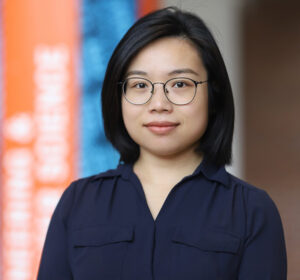
Syracuse University Professor Yiyang Sun
Visualizing Environmental Science: Dr. Todorova’s Simulator
In another collaboration, Dr. Svetoslava Todorova worked closely with Curio’s development team to create a lake water mixing simulation. This 3D animated environment models seasonal stratification and density shifts in freshwater lakes—an area of research typically difficult to visualize. By partnering directly with Curio, she was able to bring her vision to life as a robust educational tool that now lives on the platform and remains accessible to learners well beyond the original course.
Syracuse University Professor Dr. Svetoslava Todorova
Human-Centered Design at Scale: Professor Lu Xiao’s Course
Professor Lu Xiao’s UI/UX course at Syracuse University exemplified Curio’s integrated learning model by embedding students directly into the product development process. Divided into eight teams, students tackled real-world design challenges aimed at improving Curio’s user interface and upcoming features. They participated in milestone reviews with Curio developers, integrated feedback in real time, and delivered final reports that led to direct implementation in the platform. This experience offered more than academic credit—it immersed students in a professional workflow from ideation to deployment, equipping them with portfolio-ready work and practical skills in Unity, 3D graphics, UX, and systems design, all within a live, global software environment.