Builder Spotlight: Miami Dade College
How MDC Is Making Virtual Reality Accessible, Sharable, and Scalable Across Campuses
At Miami Dade College (MDC), the future of immersive learning isn’t just being imagined—it’s being realized.
Home to the acclaimed Miami Animation and Gaming International Complex (MAGIC), MDC has long been a hub for innovation in digital media, simulation, and experiential learning. Students in the MAGIC program have created impressive projects—from a walkthrough of the human digestive tract to patient triage simulations—but there was a critical gap: these experiences weren’t easily accessible beyond the classroom, and students lacked a streamlined way to showcase their work in professional portfolios.
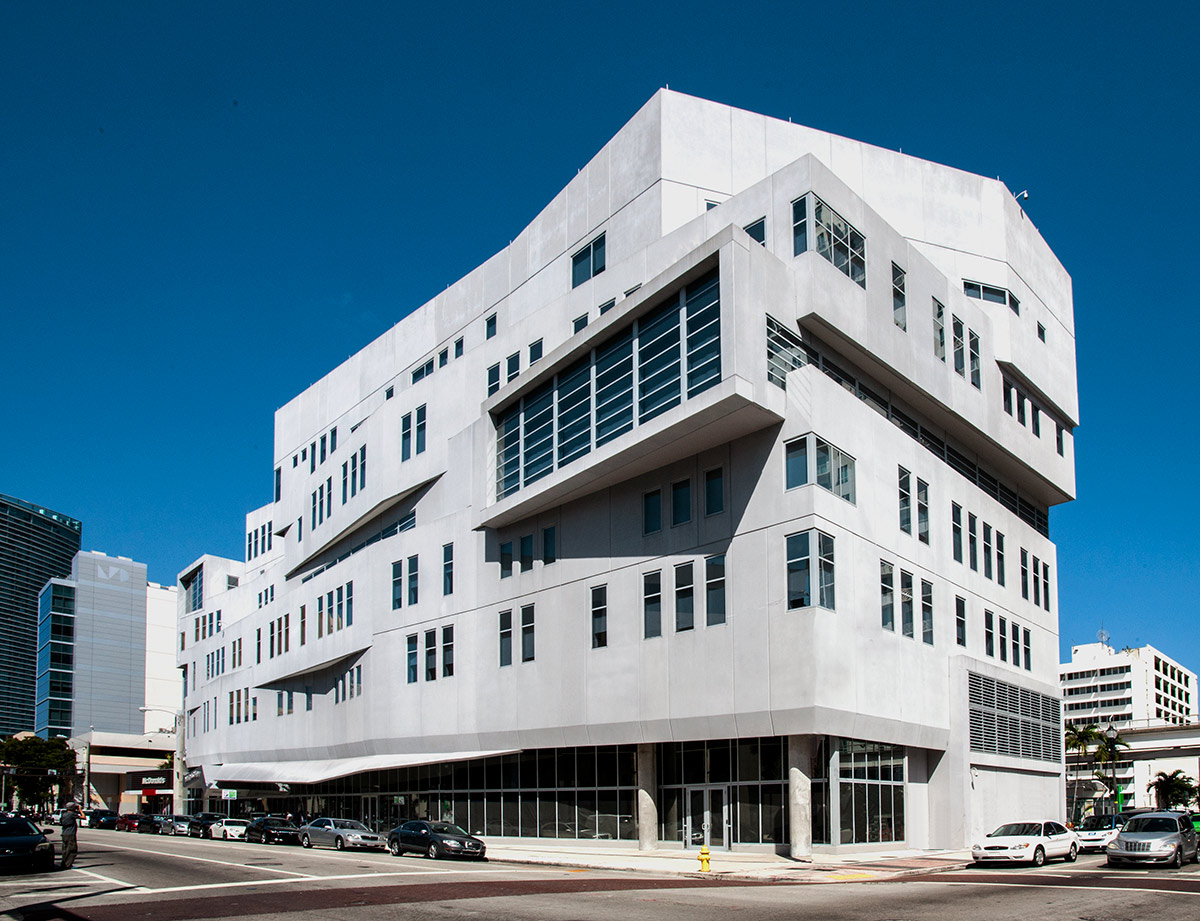

Curio: A Natural Home for MDC’s Immersive Content
That changed following conversations with Mauricio Ferrazza, Chair of the Miami Animation & Gaming International Complex (MAGIC), and faculty across the college. Together, we migrated student-created simulations into the Curio platform, making them accessible anywhere, anytime. For the first time, MAGIC’s student-built content became part of a living, interactive VR ecosystem—fully sharable, portable, and maintained at no cost to the institution.
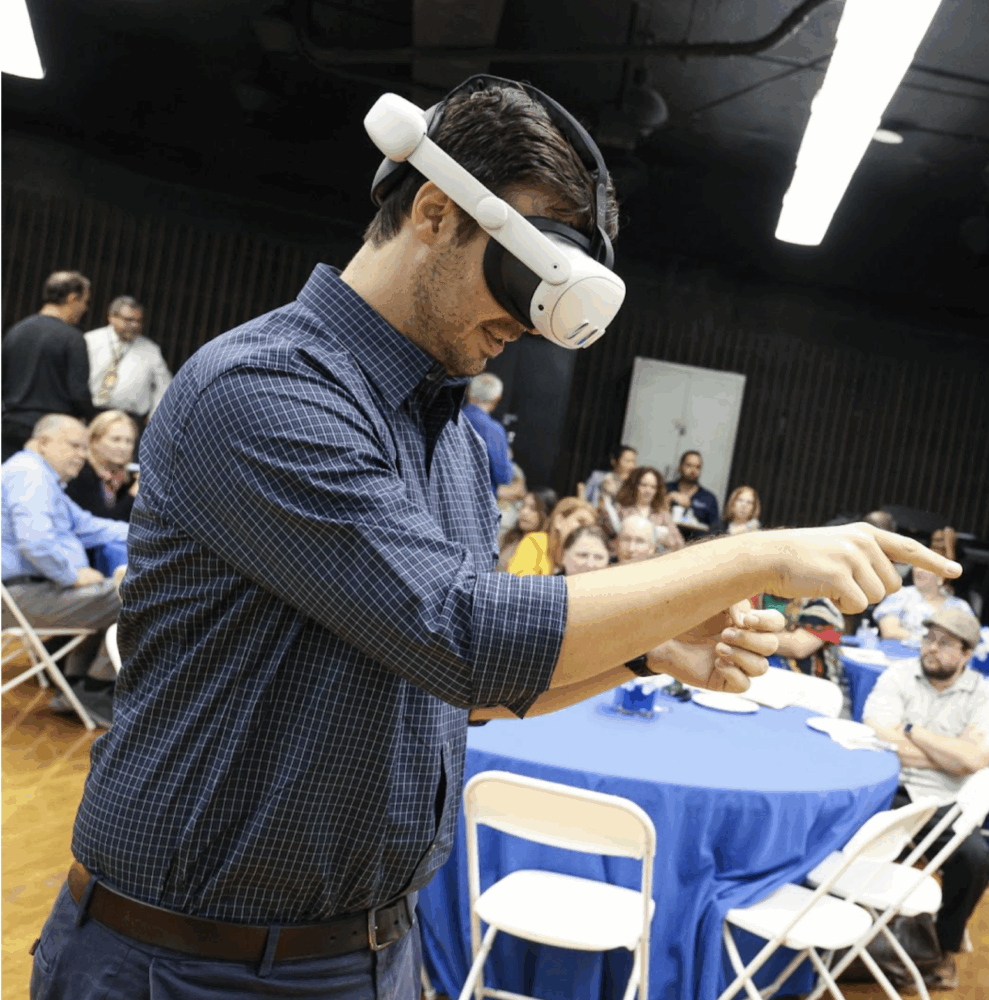
Curio in use at Miami Dade College to support interactive learning
A Home for VR Content Across Disciplines
MDC is now leading by example, using Curio as the central hub for VR content development and deployment. A sampling of active and in-progress projects includes:
- Colorblindness Simulation:
Developed as part of a philosophy course, this experience allows users to view the world through the lens of all eight types of colorblindness—illustrating the power of immersive tools to impart empathy and insight. - Digestive Tract Simulation:
Developed by students at MAGIC, this immersive biology module lets learners explore the human digestive system in VR. Embedded quizzes reinforce learning throughout the experience, making it a powerful tool for self-guided study. - Lab Lockdown:
Created by students at MAGIC and Dr. Davia Holness, this chemistry-focused escape room game challenges players to solve content-driven puzzles in order to escape a locked laboratory. Tasks include using property-based clues to identify and correctly place missing elements on the periodic table. - Patient Triage (Upcoming):
Currently being developed by MDC students, this nursing simulation will soon be integrated into Curio. It enables learners to practice rapid triage during emergency scenarios—equipping future healthcare professionals with critical decision-making skills. - Everglades Simulation (Upcoming):
This immersive module explores the unique ecosystem of the Florida Everglades. A video overview of the project, soon to be embedded in Curio, can be viewed
here. - Molecular Chemistry (Upcoming):
A traditional classroom activity—unchanged for 15 years—is being transformed into an interactive VR experience. This update will provide students with a more dynamic and intuitive way to grasp molecular concepts.
This ability to unify VR content creation and distribution in one centralized platform—without the need to manage avatars, networking, or artificial intelligence-based non-player characters—is a game-changer for a large, distributed college system like MDC.
Why It Works
MDC could have continued building its own tools from scratch—and initially planned to. But what they found in Curio was a platform that freed them to focus on what matters most: content, creativity, and learning outcomes.
By removing infrastructure burdens and simplifying maintenance, Curio enables MDC to move faster, share more broadly, and empower both students and faculty. Whether it’s simulating biology labs, visualizing complex chemistry, or preparing students for careers in healthcare, MDC is using Curio to make learning more experiential, scalable, and student-centered.
MDC found in Curio a platform that freed them to focus on what matters most: content, creativity, and student success.
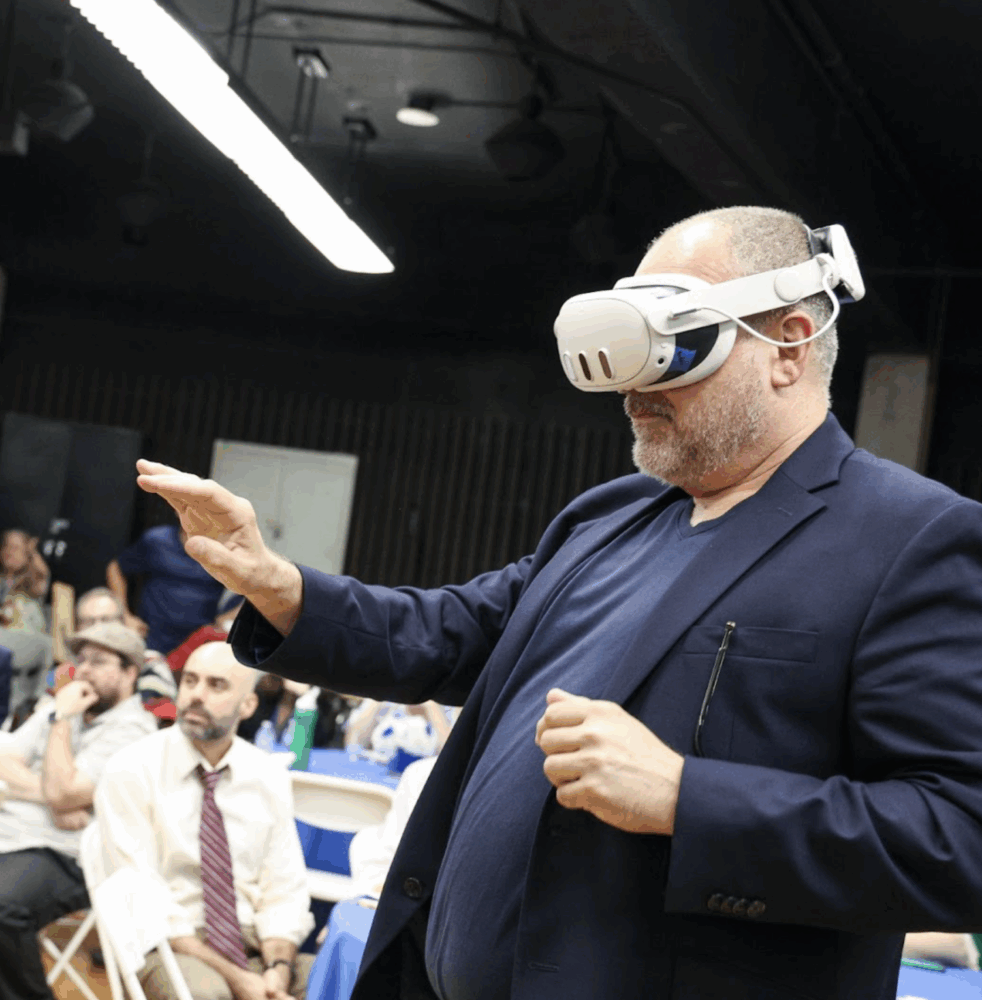
Exploring virtual environments with Curio at Miami Dade College